
Independent Living Services
Skills training that builds day-to-day independence at home and in the community.
Service
Comprehensive, flexible support for adults living in their own homes.
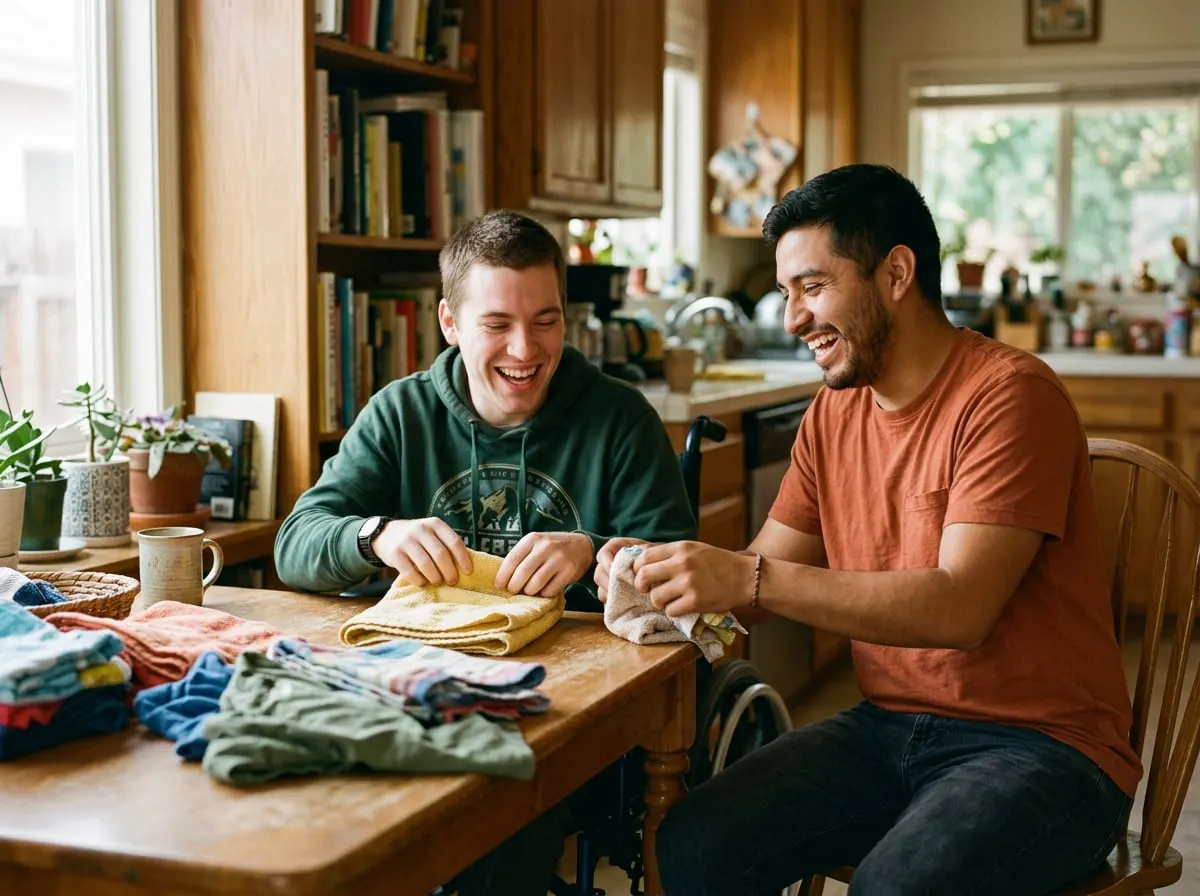
Supported Living Services (SLS) provide intensive, individualized support that helps adults with developmental disabilities live in their own homes or community settings. Unlike group home models, SLS allows people to maintain their independence while having access to the help they need.
Our SLS program combines practical skill training with ongoing support. We're there to teach, guide, and assist, but always with the goal of promoting self-direction and community inclusion.
Supported Living Services are designed for individuals who:
SLS works well for people transitioning from institutional settings, those leaving family homes, or individuals whose needs have increased beyond what lighter-touch services can provide.
We believe everyone deserves to live in the most integrated setting possible. SLS makes that possible for people who would otherwise need facility-based care.
The person receiving services is at the center of all decisions. We don't impose a standard program, we build support around each individual's preferences, goals, and daily routines.
We emphasize participation in regular community activities rather than segregated disability-only programs. Our clients shop at regular stores, attend community events, and connect with neighbors.
Whenever possible, we teach clients to complete tasks themselves rather than doing things for them. This builds competence and confidence over time.
We help clients develop relationships and supports beyond paid staff, friendships, community connections, and other resources they can rely on.
Support intensity varies based on individual needs. Some clients need staff present for several hours daily. Others require less frequent check-ins combined with on-call availability.
Morning Routines: Assistance with waking up, personal care, medication, breakfast, and getting ready for the day.
Daytime Activities: Support accessing day programs, medical appointments, volunteering, or job sites. Teaching skills like transportation use or errand completion.
Evening Routines: Help with meal preparation, cleaning, evening medication, and preparing for bed.
Community Integration: Accompanying clients to social activities, teaching them how to participate independently, facilitating connections.
Crisis Support: Being available when problems arise, whether it's a health issue, conflict with a roommate, or emotional distress.
Our SLS program supports various living situations:
Independent Apartments: Clients rent their own place with staff support coming to them.
Shared Housing: Roommates with disabilities share an apartment or house with staff support.
Host Family Homes: Clients live with a family that provides support (sometimes called "adult foster care").
Supported Housing: Apartment buildings with on-site staff available to residents.
We help families and Regional Centers determine which arrangement best fits someone's needs, preferences, and budget.
For clients with challenging behaviors, our trained staff implement positive behavior support plans developed by behavioral specialists. We focus on understanding what triggers problems and teaching alternative skills.
We maintain close contact with doctors, nurses, and therapists. Staff help schedule appointments, communicate about health changes, and ensure medical recommendations are followed.
Many of our clients have co-occurring mental health conditions. We coordinate with psychiatrists and therapists, monitor medication effects, and provide crisis intervention when needed.
We work with clients involved in the criminal justice system, supporting compliance with probation requirements while addressing underlying issues.
Step 1: Contact us to discuss the individual's support needs and living preferences.
Step 2: We'll complete a comprehensive assessment of current functioning and required assistance levels.
Step 3: Together with the Regional Center, we determine if SLS is the right service and at what intensity.
Step 4: We help identify appropriate housing options if needed.
Step 5: Services begin with an orientation period and gradual transition into the full support schedule.
Vendor #HX0767 | Service Code 896
Capacity: Call for current availability
Specialties: Community integration, behavioral support, complex medical needs
Accepted populations: Standard DD clients, forensic, IMD transitions, dual diagnosis
Contact: (562) 955-3388
Common questions
SLS provides more intensive, hands-on support. While ILS focuses primarily on teaching skills through periodic training sessions, SLS offers ongoing daily assistance and supervision. SLS staff may help complete tasks, not just teach them.
Yes, we encourage family involvement. Many clients have regular family contact, visits, and family participation in care planning meetings.
Our staff are trained in crisis intervention and emergency response. We have 24/7 on-call support available. Depending on the situation, we contact emergency services, medical providers, or behavioral specialists as needed.
SLS is typically funded through the Regional Center using Medi-Cal dollars. There's no out-of-pocket cost for eligible clients and families.
Absolutely. As clients gain skills and require less support, they can transition to ILS or other lighter-touch services. Our goal is always to help people become as independent as possible.
More ways we help
Skills training that builds day-to-day independence at home and in the community.
Positive behavioral intervention built around each person’s goals and triggers.
Practical training so families can support their loved one with confidence.
Ready when you are
Whether you’re looking for support for yourself or a family member, coordinating services for an individual, or looking for a meaningful career, Congregate Connect is ready to connect.
Reviewed by the Congregate Connect team · Last reviewed